




Kuchoriya Softwares is a well-known #travel #technology #solution provider to b2b, and b2c travel agencies, all over the globe. We are proud of being the travel #industry's one of the most trusted IT solutions providers.
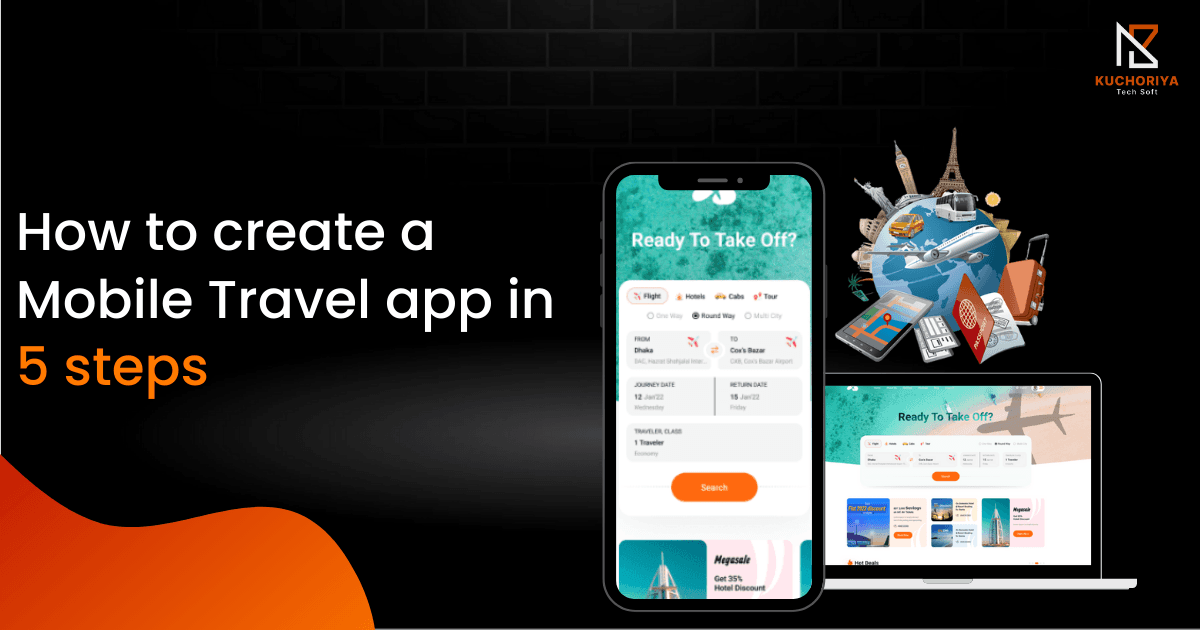
How to create a mobile travel app in 5 steps
Step 1. Chose your app type: Select the travel app type among booking, accommodation booking, transport apps, and travel guides apps.
Step 2. Conduct competitor research: Discover other travel apps in your niche, their advantages, and disadvantages. Besides, consider integrating ready-made travel app APIs.
Step 3. Select a travel app MVP features: Include the following features for your travel app MVP: user account, social sharing, booking, in-app payment, and location-based search & filters.
Step 4. Find the travel app developers: Hire the best travel app development company that proves its expertise with previous projects.
Step 5. Enter the discovery phase: Define the concept of your travel app depending on the current trends, determine the project scope and milestones, and find the best technical solutions.
Step 6. Develop the travel app: Start the app development process with a development team that will create the design and builds the code for your project.
Kuchoriya Softwares is a well-known #travel #technology #solution provider to b2b, b2c travel agencies, all over the globe. We are proud of being the travel #industry's one of the most #trusted IT solutions #provider. What do we offer:
- #B2B & #B2C #Travel Portal
- #GDS & Non GDS, XML & #API #Integrations
- Custom #design
- Personalized Solutions
With Kuchoriya Softwares travel #technology #solutions and #services you can :
- Grow your Business
- Gain more Customers
- Increase Sales
What is Mobile App Development?
The number of mobile applications has skyrocketed these past few years. With the escalating penetration of better internet connectivity and modern smartphones, as well as the growing use of smart mobile devices, we can expect that the demand for Mobile App Development will continuously increase over the following years.
Regardless of your industry, you’ll need to ensure that you stay relevant to thrive in today’s highly competitive market. The best way to keep up with the competition is to leverage the power of mobile applications and invest in Mobile App Development.
Table of contents
- What are the Different Types of Mobile Applications?
- What are the Major Mobile Application Development Platforms?
- What are the Benefits of Creating a Mobile Application?
Mobile application development is the process, procedure, or act of designing and building software applications that run on hand-held wireless computing devices like smartphones. These software applications are specifically written for the unique features of the target mobile device. Examples of these software applications are social media, health and fitness, game, entertainment, educational, and mobile banking apps.
This building process involves using a network or wireless internet to connect with remote computing resources. It also consists of implementing backend services and creating software bundles that can be installed on mobile devices. Also part of the Mobile Application Development process is testing the developed app on target devices.
Now that you already know what mobile app development is let us introduce the four different types of mobile apps.

What are the Different Types of Mobile Applications?
One of the most important things you need to consider when building a mobile application is choosing the right type of mobile app. There are currently four different types of mobile apps or development approaches designers and developers use when creating mobile applications.
- Native apps
- Cross-platform apps
- Progressive web apps
- Hybrid apps
To help you decide which one to choose, let us discuss these different types of mobile apps below.
Native mobile applications are those apps designed and built for one specific operating system or platform. They are created using IDEs or integrated development environments. This type of mobile app is written specifically for the programming framework or language supported by the mobile platform owner like Google Android and Apple iOS. It runs directly on the device’s OS.
Advantages of native apps
Native apps offer the best runtime performance. Because this type of mobile app is specifically created for a singular focus, its performance is more reliable and faster than the others.
Native mobile apps directly connect to the device APIs, allowing better access to different device features, including camera roll, Bluetooth, NFC, contacts, and more. They also offer a better user experience since they use the native device UI.